


HCA to LPN Bridging Program in BC in Summary
An HCA to LPN bridging program in BC can help eligible Health Care Assistants build on their prior education and experience. Applicants must meet program-specific academic, employment, language, and practice-placement requirements before beginning practical nursing training. Graduates must then complete BC’s registration requirements before they can practise as Licensed Practical Nurses.
If you already work as a Health Care Assistant (HCA) or Registered Care Aide in British Columbia, you may be ready for a role with broader clinical responsibility. Moving into practical nursing can build on the patient-care experience you already have.
An HCA to LPN bridging program in BC, often called a Practical Nursing Access program, can provide that next step. It recognizes relevant prior training and experience while preparing eligible learners for the academic and clinical demands of practical nursing.
What Is the HCA to LPN Bridging Program in BC?
What is the pathway from HCA to Practical Nurse in BC? The usual route is to complete recognized HCA training, gain any required work experience, meet admission standards, and enter either an access pathway or a standard Practical Nurse program.
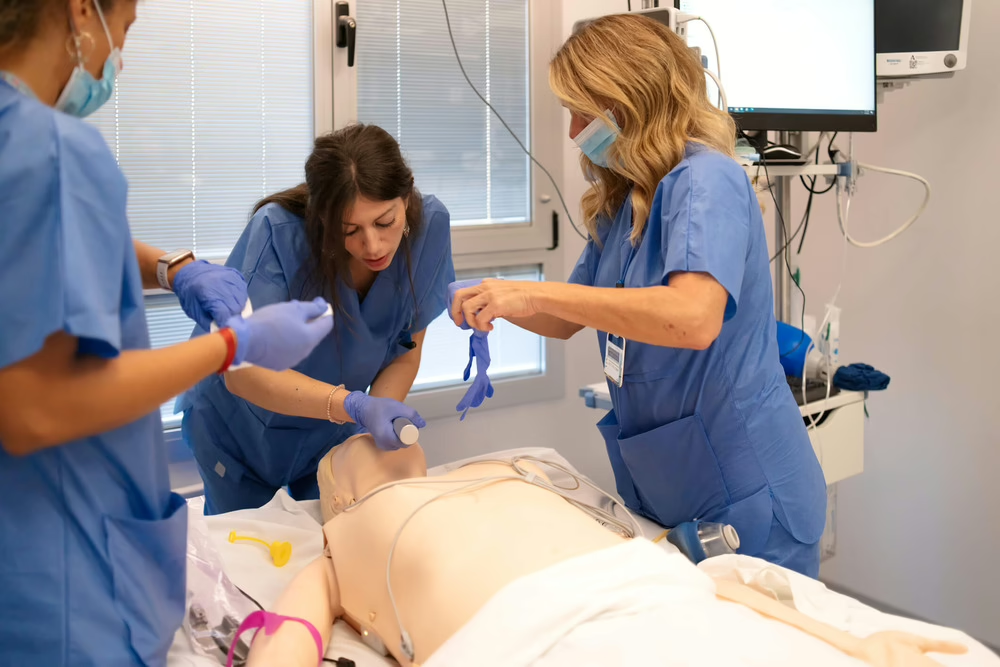
The Health Care Assistant program at Discovery Community College combines theory, simulation-centre learning, and practice placements. This can help learners build confidence in personal care, communication, and teamwork.
The next stage of the HCA to LPN in BC journey involves deeper study in anatomy and physiology, pharmacology, health promotion, professional practice, and integrated nursing care.
Can Health Care Assistants Become Practical Nurses?
Yes, but HCA experience alone does not qualify someone to practise as an LPN.
Practical nurses have a different scope of practice and must complete recognized nursing education and meet provincial licensing requirements. DCC’s Practical Nursing Access program is designed for eligible trained HCAs or Registered Care Aides who meet specific academic, work experience, and placement requirements and want to build on relevant previous preparation and a more direct route into practical nursing.
This pathway may suit you if you enjoy patient care but want to develop skills in assessment, medication administration, and care planning.
What Prerequisites Do HCAs Need Before Applying to Practical Nursing?
Exact LPN prerequisites in BC depend on the school and pathway, so applicants should have their education and employment history reviewed and should confirm the current Practical Nursing Access requirements directly with DCC. Requirements include,,,,,, and immunization requirements
Requirements may include:
- Academic prerequisites
- Proof of relevant HCA/RCA education and experience
- English-language proficiency
- CPR
- Practice-placement documentation
- Criminal record check
- Immunization requirements
Applicants who do not qualify for an access pathway may still be able to apply to the full Practical Nurse program. Admissions can help identify the route that best matches your background.
How Long Does It Take to Move From HCA to LPN?
The timeline depends on your qualifications and the program you enter. DCC lists its Practical Nursing Access diploma at 77 weeks and 1,686 hours, compared with approximately 22 months for its standard Practical Nurse diploma.
The access curriculum includes integrated nursing practice, consolidated practice experiences, and a final practice experience. Program dates and requirements may change, so confirm current information directly with the college.
What Is a Practical Nursing Access Program?
A practical nursing access program bc pathway is nursing education created for applicants who already have qualifying healthcare training and experience.
At DCC, learners study pharmacology, variations in health, health promotion, and integrated nursing practice. Supervised practice experiences help learners apply their knowledge and prepare for entry-level nursing responsibilities.
After graduating from a BCCNM-recognized practical nursing program, BC candidates must complete the provincial registration process. Current graduates are required to take the REx-PN and obtain practising registration with the British Columbia College of Nurses and Midwives before working as LPNs.

Take the Next Step in Your Healthcare Career
Learning how to become an LPN in BC begins with finding the route that recognizes your existing experience. Explore DCC’s career training programs, compare access and standard nursing options, and speak with Admissions about prerequisites and funding.
With the right preparation, your HCA experience can become the foundation for greater responsibility and a new stage in your healthcare career.
Would you like to explore a wide range of career training programs that can help you advance in healthcare?
Contact Discovery Community College for more information.
Key Takeaways
- An HCA to LPN bridging program in BC can recognize relevant prior HCA or RCA education and experience.
- Applicants must meet the applicable LPN prerequisites in BC before entering training.
- DCC’s Access Diploma is listed as a 77-week, 1,686-hour program.
- Students complete nursing coursework and supervised practice experiences.
- LPN registration in BC requires graduates to meet current BCCNM requirements, including the REx-PN.
FAQ
What is the pathway from HCA to Practical Nurse in BC?
Eligible HCAs may apply to a Practical Nursing Access program that recognizes qualifying previous education and experience. Applicants must complete the program and meet BCCNM’s licensing requirements before practising as LPNs.
Can Health Care Assistants become Practical Nurses?
Yes. HCAs can advance into practical nursing by completing recognized nursing education and satisfying the registration requirements established for LPN practice in British Columbia.
What prerequisites do HCAs need before applying to Practical Nursing?
Requirements vary by institution but may include recognized HCA education, relevant work experience, academic prerequisites, English proficiency, CPR certification, and practice-placement documentation.
How long does it take to move from HCA to LPN?
The timeline depends on the program and applicant’s qualifications. DCC currently lists its Practical Nursing Access diploma at 77 weeks, or approximately 18 months.
What is a Practical Nursing Access program?
It is a pathway for applicants with qualifying healthcare training and experience that allows them to build toward practical nursing credentials without repeating all introductory preparation.