


Education Assistants (EAs) play a vital role in helping students thrive in inclusive classrooms. At Discovery Community College (DCC), our education assistant training prepares you with the empathy, knowledge, and strategies needed to make that difference every day.
Every learner deserves the chance to succeed, and for many neurodiverse students, that success begins with the right support. From Autism Spectrum Disorder (ASD) and ADHD to dyslexia and sensory processing differences, neurodiversity represents a wide range of unique strengths and learning needs.
Here’s a look at practical approaches and tools that form the foundation of a strong EA toolkit, and how you’ll master them during your training.
1. Creating Predictable Routines
Consistency builds confidence. For many neurodiverse learners, sudden schedule changes can lead to anxiety or frustration. EAs help create structure by using visual schedules, clear transitions, and consistent routines that make the day more predictable.
During DCC’s education assistant course, students learn how to develop adaptable daily plans and use tools like picture charts and digital calendars to help students feel safe, prepared, and engaged.
A simple “first-then” chart, for instance, can turn overwhelming tasks into manageable steps, helping students stay focused and calm.
2. Supporting Communication and Social Skills
Every student communicates differently. Some use speech, others gestures, assistive technology, or visual aids. Education Assistants are often the bridge between a student’s unique communication style and their peers or teachers.
In practice, that might mean modeling social interactions, using augmentative and alternative communication (AAC) tools, or helping students interpret tone and body language.
At DCC, you’ll learn evidence-based approaches to social-emotional learning (SEL) and communication support, empowering students to connect confidently in and beyond the classroom.

3. Sensory Regulation and Environment Design for Neurodiverse Learners
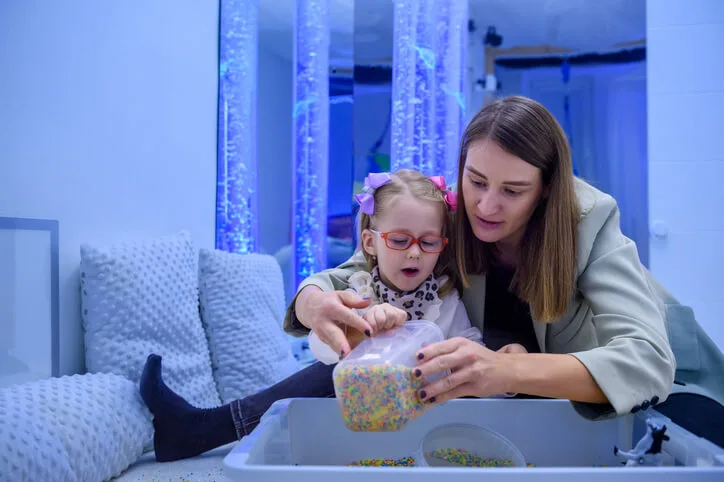
Neurodiverse students often process sensory input, like noise, light, or touch, differently. A supportive classroom recognizes these sensitivities. EAs can help design “sensory-safe” spaces with options like noise-canceling headphones, soft lighting, and calming corners.
Throughout your education assistant course at DCC, your instructors will guide you in identifying sensory triggers and tailoring environments to meet diverse needs. You’ll also gain experience creating sensory tools, like fidget kits or textured materials, that support focus and emotional regulation.
Even small changes, such as rearranging seating or reducing visual clutter, can help students feel more comfortable and ready to learn.
4. Positive Behaviour Support
Rather than viewing behaviours as challenges, EAs are trained to see them as communication. Behaviour tells a story of unmet needs, stress, or misunderstanding.
Through positive behaviour support (PBS), EAs learn to analyze patterns, anticipate triggers, and apply proactive strategies. That might mean providing sensory breaks, offering choices, or reinforcing positive effort.
At DCC, future Education Assistants practice behaviour intervention methods through case studies and hands-on simulations, gaining the confidence to create respectful, inclusive learning spaces.
5. Collaboration and Advocacy
An effective Education Assistant is both a team player and an advocate. Working alongside teachers, counsellors, and families, EAs ensure that each student’s Individualized Education Plan (IEP) is implemented with care and accuracy.
You’ll learn how to document observations, communicate progress, and collaborate across disciplines to ensure consistency between school and home environments.
At DCC, students also explore advocacy, learning to champion inclusion and understanding within the school community, so neurodiverse learners are not just accommodated, but celebrated.
Experience Education Assistant Training With a Difference
DCC’s education assistant training combines theory with real-world experience. Through in-class learning and practical placements in BC schools, students graduate ready to support children with diverse learning needs from day one.
You’ll leave the program not just with professional skills, but with a deeper understanding of empathy, patience, and adaptability. These qualities make Education Assistants invaluable in today’s inclusive classrooms.
If you’re ready to make a meaningful impact in your community, DCC’s flexible training programs can help you start your journey.
Do you want to become an education assistant?
Contact DCC for more information.